Feedly: Rethinking News Consumption Through Intelligent Content Curation in the Digital Age

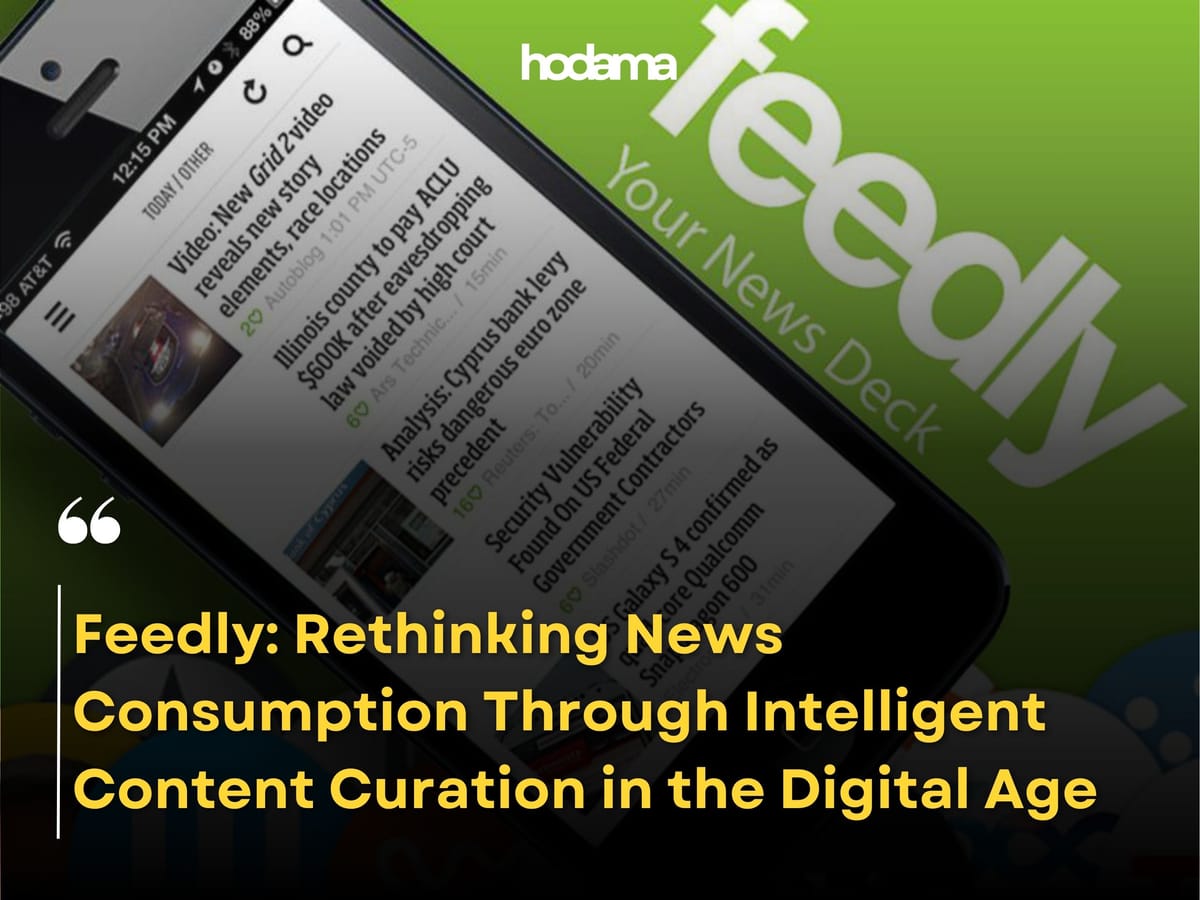
We are living in a time where information overload is no longer an exception but the default state of our daily lives. From social media feeds to blogs, research publications, and news platforms, we are constantly surrounded by an endless stream of content competing for our attention. In such an environment, manually filtering what truly matters becomes not only difficult but often unrealistic. This is where Feedly steps in, not just as another news app, but as a sophisticated system designed to transform how we consume and process information.
Originally built as an RSS based reader, Feedly gained popularity by allowing users to aggregate content from multiple sources into a single, organized interface. RSS technology itself was a breakthrough in simplifying content access, but Feedly did not stop there. Over time, it evolved into a far more advanced platform powered by artificial intelligence. At the center of this transformation is its AI engine known as Leo, which uses machine learning techniques to understand user preferences, filter out noise, and highlight content that truly matters. In essence, it is not just managing information, but actively shaping a smarter reading experience.
When we look at modern content consumption patterns, there has been a clear shift from intentional reading to algorithm driven discovery. Platforms like Facebook or LinkedIn prioritize engagement, often pushing content designed to capture attention rather than deliver value. Feedly, however, takes a different approach. Its design philosophy focuses on minimizing distraction and maximizing meaningful knowledge intake. This is one of the reasons why it has become particularly valuable among professionals, researchers, and technology enthusiasts who rely on high quality, relevant information.
Another compelling aspect of Feedly is its integration with productivity ecosystems. It seamlessly connects with tools such as Slack, Trello, and Notion, allowing users to move beyond passive reading into active knowledge workflows. Instead of consuming content and moving on, users can store, organize, and transform insights into actionable outcomes. This shift from consumption to application reflects a deeper understanding of how knowledge work functions in the modern era.
Beyond individual use, Feedly has also positioned itself as a powerful tool for organizations. It is increasingly used for cybersecurity monitoring, industry trend analysis, and competitive intelligence. Through features like keyword tracking and signal detection, the platform helps identify emerging patterns and potential risks in real time. This elevates it from a simple reader to a strategic decision support tool, capable of providing insights that influence business outcomes.
What makes Feedly particularly interesting is how it reflects the broader evolution of digital tools. Many platforms begin by offering convenience, but the most impactful ones evolve into intelligence driven systems. Feedly represents this shift clearly. It is no longer just about accessing information quickly, but about interpreting that information in a way that adds value to decision making and critical thinking.
Ultimately, this is not just a story about an app, but about our relationship with information itself. In a knowledge driven economy, the true value does not lie in the volume of data we consume, but in our ability to extract meaning from it. Tools like Feedly make this process more efficient, but they also raise an important question. Are we using these tools to enhance our thinking, or are we slowly allowing algorithms to shape what we think without realizing it.