
Saros: Ritual Combat Design and Cinematic Bullet Hell Experience Redefining Modern Gameplay Standards

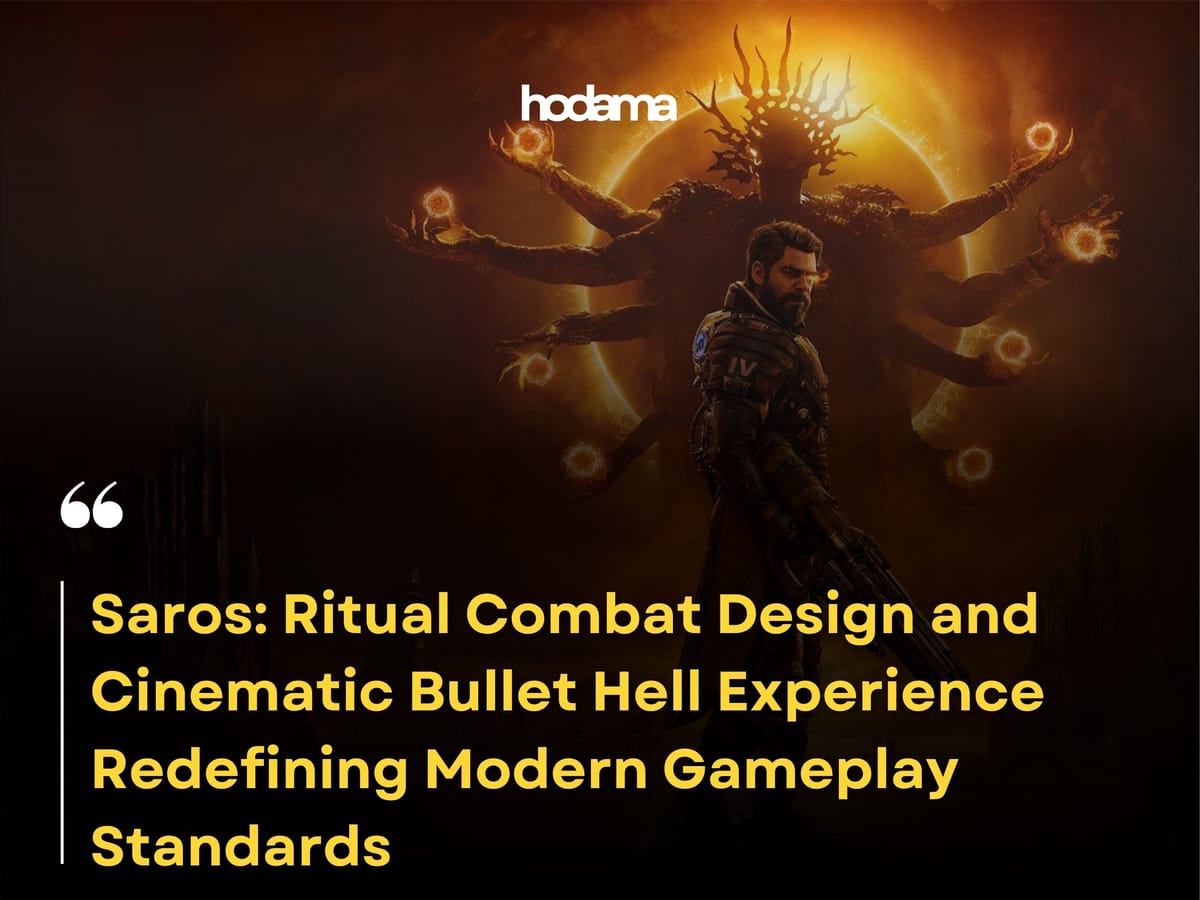
Saros isn’t just another entry into the crowded action shooter space, and that becomes immediately clear the moment you look at the Priestess boss fight gameplay. Developed by Housemarque, the studio behind Returnal, this title feels less like a continuation and more like an evolution of ideas that have been quietly reshaping the roguelite genre over the past few years.
The Cathedral setting in the Priestess encounter is more than just a visually impressive arena. It functions as a deliberate piece of environmental storytelling fused tightly with gameplay mechanics. Traditionally, a cathedral symbolizes sanctity and protection, but here that symbolism is inverted. The space itself becomes hostile, almost ritualistic, as holy fire and relentless homing projectiles transform what should feel sacred into something oppressive and dangerous. This contrast is not accidental. It reflects a broader trend in modern game design where environment is no longer passive scenery but an active participant in combat.
What stands out most is how Saros adapts the classic bullet hell design language into a modern third person framework. In traditional bullet hell games, survival depends on memorizing intricate projectile patterns across a fixed screen. Saros takes that concept and injects it with mobility and spatial freedom. The player is not just dodging but constantly repositioning, predicting trajectories, and reacting in real time. Movement becomes a strategic layer rather than a simple mechanic. Every dash, every shift in position carries weight because it directly influences survivability.
The Priestess fight is structured around ritual phases, and this is where the design becomes particularly interesting. These phases are not just checkpoints tied to a health bar. They represent behavioral shifts in the boss itself. Attack density increases, patterns become more complex, and the visual intensity escalates. This creates a pacing curve that gradually builds psychological pressure. The player is not only challenged mechanically but also mentally, as maintaining composure becomes just as important as executing precise inputs.
Another key element is the Soltari shield, which introduces a timing based defensive system. Unlike traditional shields that encourage passive play, this one demands awareness and precision. It rewards players who can read attack patterns and respond at exactly the right moment. This shifts the gameplay from reactive defense to proactive decision making, reinforcing the idea that mastery comes from understanding systems rather than simply enduring them.
Looking at Saros in a broader context, it reflects how the roguelite genre itself is evolving. Earlier iterations of the genre often relied heavily on randomness and repetition. While those elements still exist, games like Saros emphasize player skill, adaptability, and learning curves. Progression is no longer just about unlocking upgrades but about improving as a player, understanding systems, and refining strategies over time.
The cinematic quality of the Priestess encounter is also worth noting. Through the use of dynamic camera work, detailed particle effects, advanced lighting, and carefully crafted sound design, the fight feels like a choreographed sequence rather than a purely mechanical challenge. This blending of cinematic presentation with interactive gameplay blurs the line between playing and experiencing. It is no longer just about defeating a boss but about being immersed in a moment that feels both intense and memorable.
Ultimately, the Priestess boss fight is not simply a test of difficulty. It is a carefully constructed system designed to push players on multiple levels, from reflexes and timing to awareness and adaptability. Saros, through encounters like this, signals a clear direction for the future of high budget game design. It shows how combining mechanical depth with cinematic ambition can create experiences that are not only challenging but also deeply engaging in a way that stays with players long after the fight is over.