
UK Moves to Restrict Social Media for Under-16s: Protection or Control in Disguise?

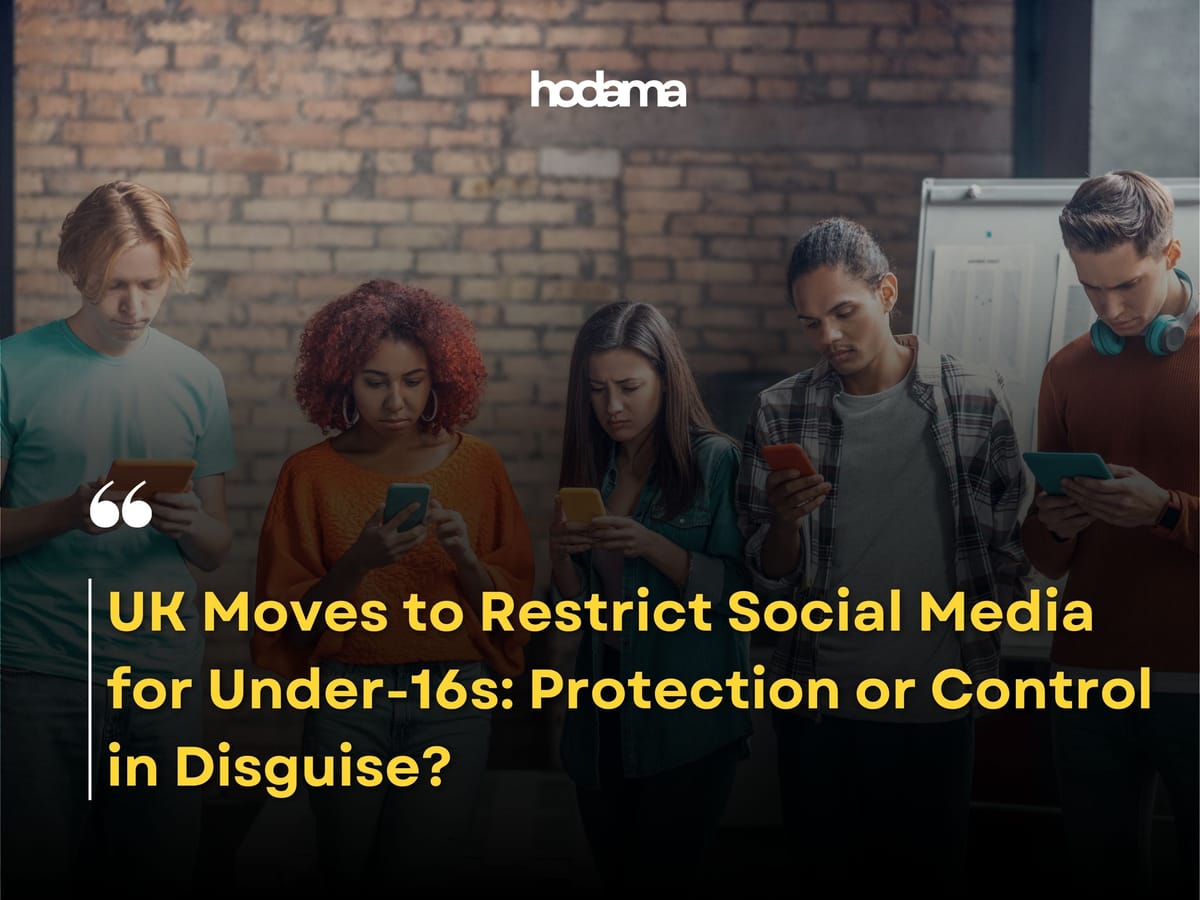
We all reach for our phones without thinking. It has become second nature. But this latest move from the UK government is something that makes you pause for a second. They have made it clear that social media restrictions for children under 16 will become mandatory. Not “maybe,” not “depending on feedback.” Some form of limitation is definitely coming. Their message is simple: the current situation cannot continue. And when a government says something like that so firmly, it is usually a sign that a deeper shift is already underway.
What makes this more interesting is how we got here. This was not a sudden decision. There has been ongoing pressure from lawmakers to completely ban under-16s from social media, similar to what Australia has considered. But instead of going for a full ban, the UK government is leaning toward more flexible controls. Things like time limits, curfews, or restricting access to certain features or platforms. That choice alone says a lot. It shows they understand that social media is too embedded in daily life to simply remove, but also too powerful to leave unchecked.
However, there is a detail that raises an important question. Even while a national consultation is still ongoing, the government has already confirmed that restrictions will happen regardless of the outcome. That shifts the role of the consultation. It is no longer about deciding whether action is needed, but only about how it will be implemented. This makes you wonder how much public input actually shapes policy in situations like this. Is it genuine participation, or just a way to refine decisions that have already been made?
On the surface, restricting social media for younger users sounds reasonable. We have all heard about issues like cyberbullying, addiction, and reduced attention spans. Many teenagers spend hours scrolling without even realizing it. The idea of protecting them from these risks feels logical. But the story does not end there. Social media is not just a source of distraction. It is also a space for learning, creativity, and connection. Removing or limiting access too heavily could unintentionally block those benefits as well.
Then comes the bigger concern: privacy. To enforce age restrictions, platforms would need to verify who is under 16 and who is not. In practice, that often means ID checks, facial recognition, or other forms of data collection. Suddenly, this is no longer just about children. It affects everyone. Adults may also have to prove their identity online just to access basic platforms. That introduces a completely different risk. Are we moving toward a future where anonymity online disappears entirely?
Think about a simple real-life situation. A 15-year-old student who uses social media platforms to learn graphic design or coding. They might follow tutorials, connect with communities, and build skills that schools do not teach. Now imagine strict time limits or restricted access cutting into that process. What was meant to protect them could also slow down their growth. This is where the issue becomes complicated. Good intentions do not always lead to perfect outcomes.
Another angle that often gets overlooked is responsibility. Who should actually manage how children use technology? Governments can set rules. Tech companies can design safer platforms. Parents can guide behavior. Schools can teach digital awareness. The truth is, none of these alone is enough. This is a shared responsibility. Focusing too heavily on one solution, like regulation, might ignore the importance of education and personal guidance.
In the end, this decision is about more than just social media. It is about how society chooses to deal with powerful technology. Do we control it through strict rules, or do we teach people how to use it wisely? The UK is clearly moving toward stronger control, at least for younger users. And once one country takes that step, others often follow. What starts as a policy for children could slowly expand into broader digital regulation for everyone.
So the real question is not just whether children should have limits. It is about where we draw the line between protection and control. At what point does safety start to reduce freedom, privacy, and opportunity?
Do you think restricting social media for under-16s is truly about protecting the next generation, or is it the beginning of a much bigger shift in how all of us experience the internet?