Final Fantasy 7 Remake Part 3: Balancing Nostalgia and Innovation to Redefine the Final Chapter Experience

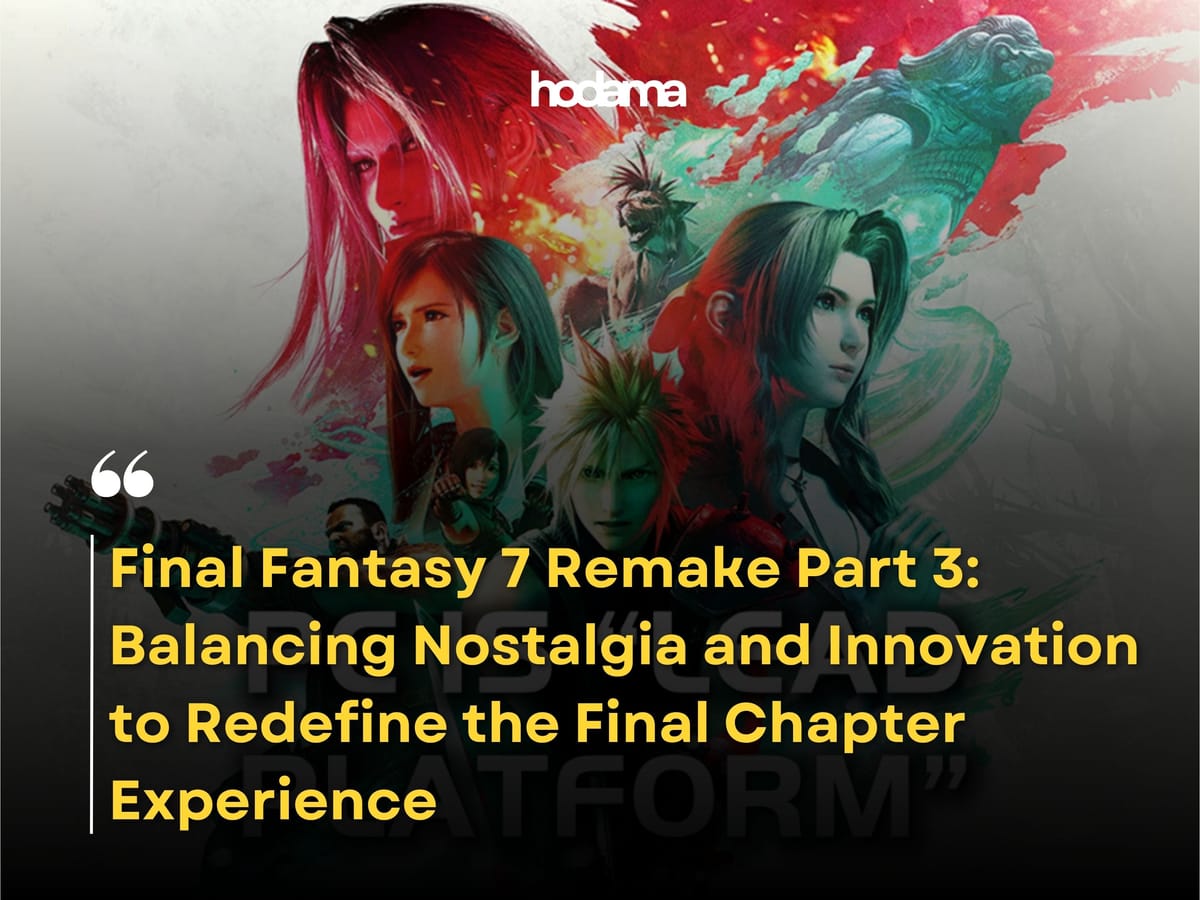
When talking about iconic RPG experiences, Final Fantasy VII is never just “another game.” It represents a turning point in how storytelling, character development, and world-building could emotionally connect with players. That is exactly why Square Enix made the bold decision to rebuild it as a trilogy rather than a single remake. Now, with Final Fantasy VII Remake Part 3 officially confirmed to be progressing “on schedule,” the conversation has shifted from uncertainty to anticipation, even if the release window still remains undisclosed.
Director Naoki Hamaguchi has reassured fans that development is moving steadily, but what makes this update interesting is not just the timeline. It is what it reveals about the philosophy behind the project. In modern game development, especially with legacy titles, the biggest challenge is not technical execution but creative direction. How do you preserve the emotional weight of the original while evolving the experience for a new generation that expects advanced gameplay systems, cinematic presentation, and deeper interactivity?
This remake trilogy has never been about simple visual enhancement. Instead, it operates more like a reinterpretation. The original narrative is being expanded, restructured, and in some cases reimagined to create a layered storytelling experience that fits today’s open-world RPG expectations. The first installment in 2020 introduced players to a more detailed Midgar, while the second entry expanded scale and exploration dramatically. By the time Part 3 arrives, this becomes a long-form narrative arc spanning nearly six years, something rarely seen in the industry for a single story adaptation.
Hamaguchi’s comments about balancing nostalgia and innovation highlight a deeper industry trend. Nostalgia alone is no longer enough to sustain engagement. Players who grew up with the original want emotional authenticity, while newer audiences expect systemic depth and modern design standards. This creates a design tension. Lean too heavily into nostalgia, and the experience risks feeling outdated. Push too far into innovation, and the core identity of the game begins to fade.
One of the clearest examples of this balance is the Queen’s Blood card system introduced in the previous installment. Rather than being treated as a simple mini-game, it was designed as a strategic subsystem with its own progression and engagement loop. This reflects a broader shift in RPG design, where optional mechanics are crafted to feel meaningful rather than disposable. It is not just about adding content, but about creating layers of interaction that deepen immersion across the entire gameplay experience.
Looking back at the original Final Fantasy VII, part of its charm came from its unpredictability. Moments like riding a dolphin to access Junon or participating in a military parade disguised as a soldier added a surreal tone that contrasted with the game’s darker themes. These elements may seem unusual by today’s standards, but they contributed to the game’s distinct identity. The challenge for Part 3 lies in deciding how much of that eccentricity should be preserved versus adapted into a more grounded, cinematic framework.
There are also strong indications that Part 3 will expand both gameplay mechanics and world design even further. New locations, refined combat systems, and additional layers of interaction are expected. From a technical perspective, delivering this level of scale while maintaining performance across multiple platforms is a significant undertaking. However, Hamaguchi has emphasized that expanding platform availability will not compromise quality, which suggests a strong focus on optimization and refinement during the final stages of development.
Interestingly, the project is now described as being close to completion, with the team entering a polishing phase. In game development, this stage is often where the final identity of the product is truly shaped. It is less about building new features and more about refining pacing, improving responsiveness, and ensuring that every element contributes cohesively to the overall experience. This is where a good game becomes a memorable one.
Ultimately, Final Fantasy VII Remake Part 3 is not just the end of a trilogy. It represents the conclusion of a long-term creative experiment in how classic games can be reimagined for modern audiences without losing their emotional core. The wait may feel long, but in many ways, that anticipation has become part of the experience itself.