Stranger Things: Tales From ’85 Season 2 Signals a Bold New Era for Franchise Storytelling Evolution

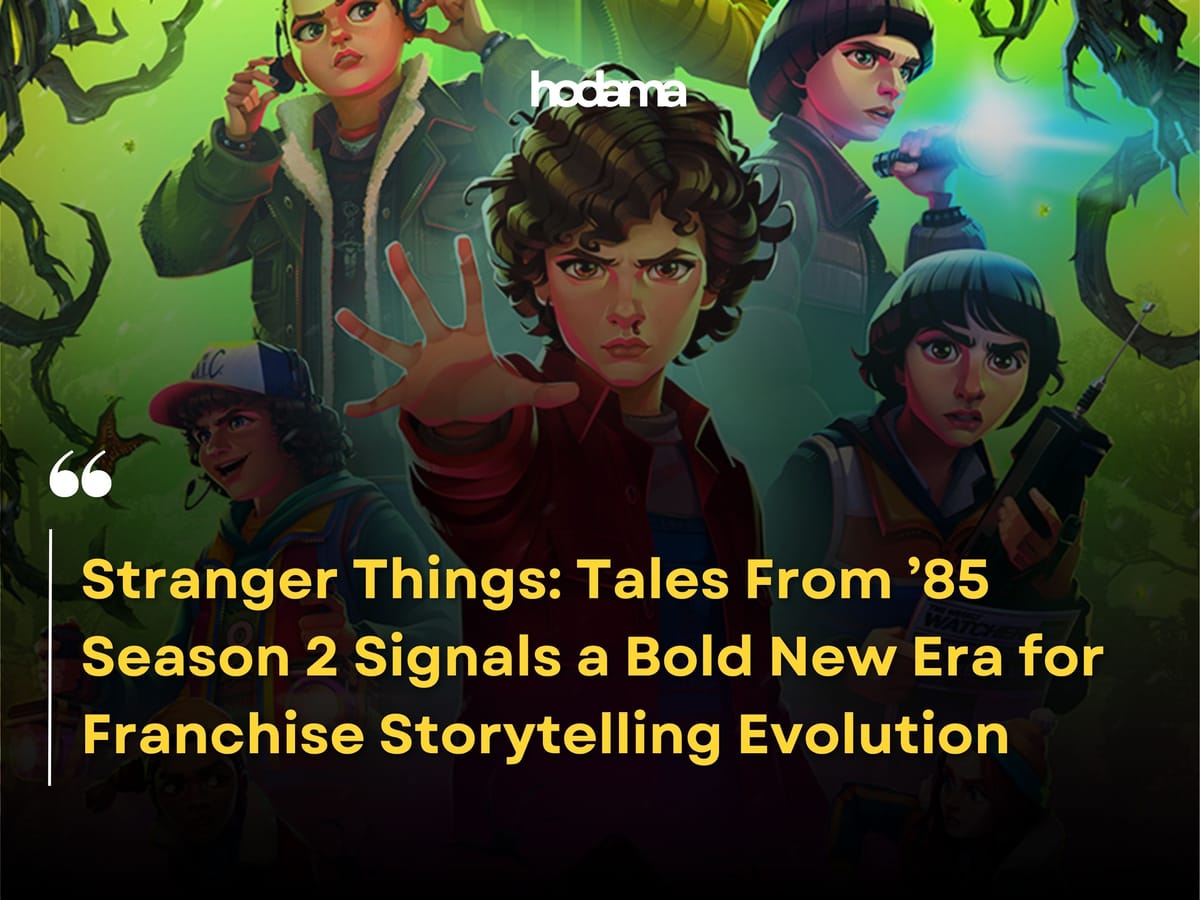
When we talk about modern streaming culture, Stranger Things is no longer just a TV show. It has quietly transformed into a full scale entertainment universe, and Netflix clearly has no intention of letting that momentum fade. Even though the original series wrapped up at the end of 2025, the story world continues to expand, and the renewal of Stranger Things: Tales From '85 for a second season is a strong reminder that this franchise is far from finished.
What makes this especially interesting is that the first season did not receive overwhelming critical praise. Reviews were mixed, yet the show still managed to break into the top tier of animated debuts on Netflix. That contrast highlights something important about today’s entertainment industry. Success is no longer defined purely by critics. Instead, it is driven by audience behavior, completion rates, binge patterns, and overall engagement metrics. In that sense, Tales From ’85 performed exactly where it needed to, proving that viewer interest in the Stranger Things universe remains strong.
From a storytelling perspective, the animated series fills the narrative gap between Season 2 and Season 3 of the original show. This is not just a convenient placement. It reflects a deliberate strategy to deepen the lore without disrupting the established timeline. The creators, The Duffer Brothers, have always been careful about maintaining continuity, and this spin off acts as an extension rather than a replacement. It allows fans to revisit familiar characters while exploring untold moments that enrich the overall narrative.
However, the series is not without its complications. Showrunner Eric Robles has openly acknowledged continuity challenges, particularly with the introduction of Nikki Baxter, a character who does not appear in the original series timeline. At first glance, this might seem like a flaw, but it also reveals something deeper about how franchises evolve. Expanding a universe often requires creative risks, even if it means bending established boundaries. We have seen similar patterns in other major franchises, where new characters and storylines are introduced first and explained later.
Robles has hinted that there is a clear plan to resolve these inconsistencies and bring the story to a meaningful conclusion. That is significant because modern audiences expect more than endless continuation. They want closure that feels earned. A well executed ending can strengthen the entire franchise, while a weak one can undermine it. The fact that the creative team is thinking ahead suggests a level of narrative discipline that is often missing in long running series.
Another notable shift is the tone of the animated series. Unlike the darker, horror driven atmosphere of the original show, Tales From ’85 adopts a brighter, more accessible visual style. This is not just an artistic choice. It is a strategic move to reach a broader audience, including younger viewers who may not have engaged with the original series. By adjusting the tone, Netflix is effectively expanding the franchise’s demographic reach without altering its core identity.
The release strategy also reflects modern viewing habits. Instead of spacing out episodes over several weeks, the entire season was released at once. This binge focused model has become a defining feature of streaming platforms, designed to maximize engagement and keep audiences immersed in the story for longer periods. It is a clear example of how distribution strategies have evolved alongside audience expectations.
Looking ahead, Tales From ’85 is only one piece of a larger puzzle. The Duffer Brothers have already hinted at another live action spin off set outside of Hawkins, featuring entirely new characters. This suggests that Netflix is building something much bigger, potentially an interconnected universe similar to what we have seen in other major entertainment franchises. The goal is no longer just to tell one story, but to create a world that can sustain multiple narratives over time.
In the end, the renewal of Tales From ’85 for a second season is more than just another announcement. It represents a shift in how stories are told, expanded, and sustained in the streaming era. Stranger Things is no longer defined by a single storyline or a fixed ending. Instead, it is evolving into a flexible narrative ecosystem, one that continues to grow, adapt, and find new ways to stay relevant in an increasingly competitive entertainment landscape.