The Blood of Dawnwalker: A Vampire RPG That Redefines Narrative Sandbox and Player Choice

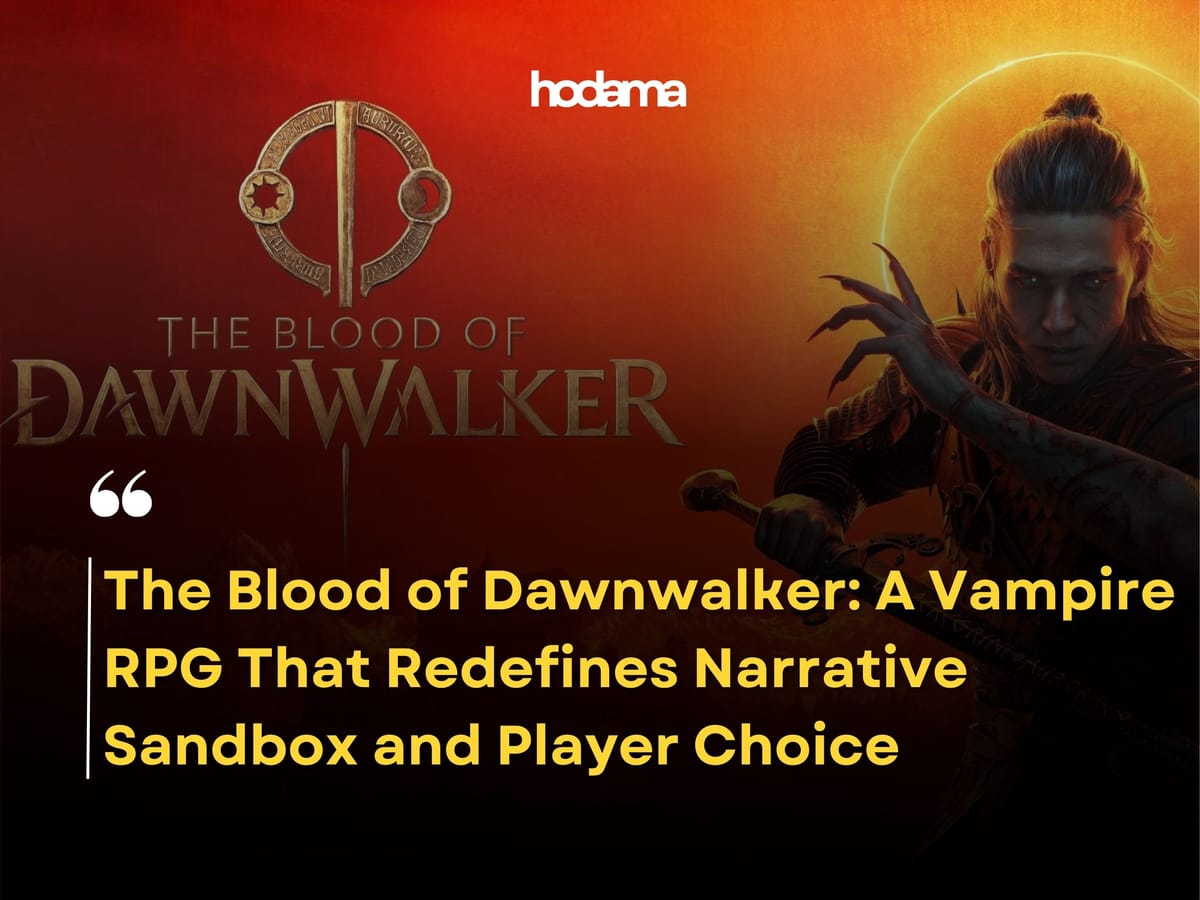
There is no shortage of vampire themed games in the modern gaming landscape, but The Blood of Dawnwalker does not feel like just another entry in a familiar genre. With its release date officially set for September 3, 2026, this upcoming title is already generating serious conversation about the future direction of role playing games and how storytelling can evolve beyond traditional boundaries.
Developed by Rebel Wolves, the project carries a certain level of expectation from the start. The studio is made up of experienced developers who have previously worked on deeply narrative driven RPG systems, and that influence is clearly visible here. Rather than focusing purely on combat or visual spectacle, the game is structured as a narrative sandbox where player decisions are not just cosmetic but deeply integrated into how the world unfolds.
One of the most talked about mechanics is the human versus vampire duality system. This is not a simple morality bar or a binary choice system. Instead, it represents a dynamic transformation that affects abilities, interactions, and even the direction of the story itself. The player is constantly navigating between two identities, and that tension becomes part of the core gameplay loop. This mechanic has already sparked debate among players, particularly around how much control the player truly has versus how much the system guides or restricts them.
Another bold design decision is the introduction of a time constraint system. Unlike traditional open world RPGs that allow players to explore endlessly without consequence, this game introduces a sense of urgency that shapes the narrative flow. Time moves forward, events evolve, and characters react whether the player is ready or not. This creates a living world that does not wait passively, making every decision feel more significant. It is less about rushing the player and more about ensuring that the world feels reactive and alive.
When looking at the bigger picture, this approach positions The Blood of Dawnwalker as a potential step forward in the evolution of narrative driven games. It sits somewhere between linear storytelling and fully emergent gameplay, attempting to balance player freedom with meaningful consequences. That balance has always been one of the hardest challenges in RPG design, and this game seems to be leaning directly into that complexity.
Visually, the game leans into a dark and atmospheric aesthetic that complements its themes. The lighting, environmental detail, and character animation all contribute to a grounded gothic tone. Rather than relying on exaggerated fantasy visuals, it appears to aim for a more immersive and believable world, which strengthens the emotional weight of its narrative.
On the publishing side, the involvement of Bandai Namco Entertainment suggests a project with significant scale and ambition. This is not a small experimental title but a full scale production that aims to reach a global audience while still pushing creative boundaries.
Ultimately, what makes The Blood of Dawnwalker so interesting is not just its setting, but what it represents. It raises an important question about where RPGs are heading. If this kind of design succeeds, we may see more developers moving away from predictable branching paths and toward systems that allow stories to emerge organically from player actions.
This is more than just a game about vampires. It is an exploration of how interactive storytelling can evolve when player choice is treated not as a feature, but as the foundation of the entire experience.