Is DeepSeek V4 Quietly Rewriting the Rules of the AI Industry?
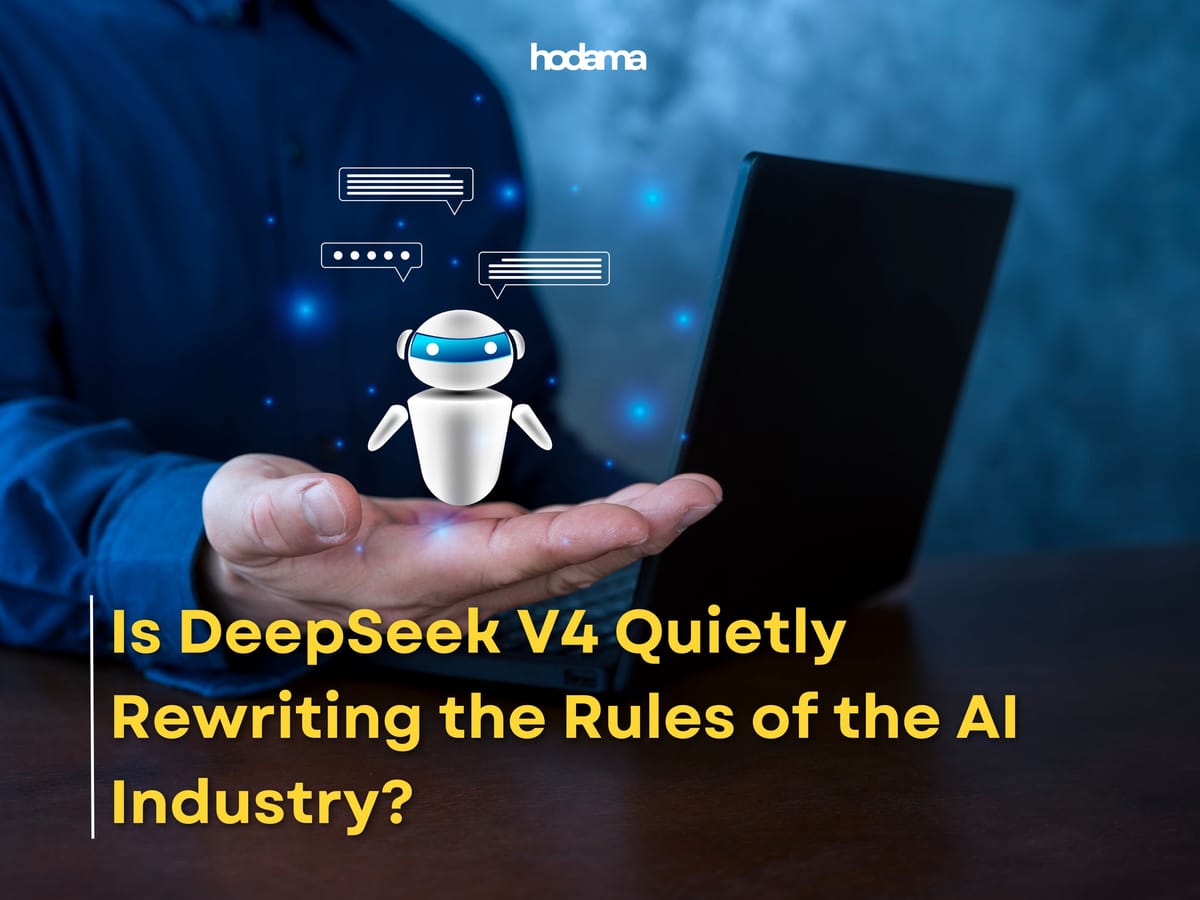
The AI race has clearly entered a new phase, but DeepSeek V4 doesn’t feel like just another routine upgrade. It feels calculated. Intentional. Almost like a quiet attempt to change how the entire game is played. When the model launched last week, one detail stood out immediately. DeepSeek had moved away from Nvidia hardware and optimized its system for Huawei Ascend chips instead. That’s not a small technical tweak. That’s a signal. It suggests this isn’t just about building a better model. It’s about building control in a world where AI is quickly becoming a form of power.
To understand this move, you have to look beyond engineering decisions. US export restrictions have been tightening, and Chinese companies are being pushed to rely less on foreign technology. DeepSeek’s shift reflects that pressure, but also a broader ambition. They are not just adapting. They are building a self-sufficient AI stack. When a company controls its hardware, software, and pricing, it stops playing by others’ rules. It starts setting its own. And in AI, the one who sets the rules often defines the future.
What makes this even more interesting is how quickly DeepSeek V4 is being adopted. OpenClaw has already integrated it, making the lighter V4 Flash its default model while also offering the more powerful V4 Pro. This is not just distribution. It’s strategic placement. AI agents are becoming the backbone of how people interact with technology, from coding to automation. By embedding itself into these systems, DeepSeek is positioning its models at the center of everyday AI usage. It’s not just building tools. It’s becoming part of the infrastructure.
Then comes pricing, which might be the boldest move of all. DeepSeek didn’t just compete. It undercut the market aggressively. At launch, its V4 Pro model was already significantly cheaper than competitors. But the additional 75 percent promotional discount takes things to another level. Suddenly, powerful AI becomes accessible at a fraction of the usual cost. This isn’t just a pricing strategy. It’s a disruption strategy. Lower costs mean more developers, more startups, and more experimentation. It opens doors that were previously closed.
If you step back, a clear three-part strategy starts to emerge. First, make AI cheaper so it can scale everywhere. Second, integrate deeply with platforms people already use to drive adoption. Third, reduce dependence on external hardware to gain long-term control. Each of these moves reinforces the others. Together, they form something much bigger than a product launch. They form a blueprint for reshaping the AI ecosystem itself.
Interestingly, DeepSeek is not positioning itself as the absolute performance leader. By its own admission, V4 Pro still trails behind top closed models like Google’s Gemini-Pro. But that might not be the point. Instead of chasing benchmark headlines, DeepSeek appears to be playing a longer game. It is focusing on how AI is built, how it is deployed, and most importantly, how it is priced. That’s a different kind of competition. One that shifts attention from raw capability to accessibility and control.
This shift has real-world implications. Imagine a small startup trying to build an AI-powered product. Until recently, costs could be a major barrier. Access to high-quality models often required significant investment. But with pricing like DeepSeek’s, that barrier starts to disappear. A small team can now experiment, build, and launch faster than before. This doesn’t just help businesses. It accelerates innovation across the board. More ideas get tested. More solutions reach users.
At the same time, this raises deeper questions about influence and control. If a few companies begin to dominate not just technology, but also pricing and infrastructure, they gain significant leverage over the direction of the industry. And when those companies are tied to specific geopolitical ecosystems, the impact goes beyond technology. It affects global competition, digital independence, and even policy decisions. AI is no longer just a tool. It’s part of a larger strategic landscape.
So DeepSeek V4 is not just another model release. It represents a shift in thinking. A move away from simply building better AI toward shaping how AI is accessed and controlled. Whether this strategy succeeds or not is still uncertain. But one thing is already clear. The future of AI will not be decided by performance alone.
Do you think the companies that win the AI race will be the ones with the most powerful models, or the ones with the smartest strategy behind them?