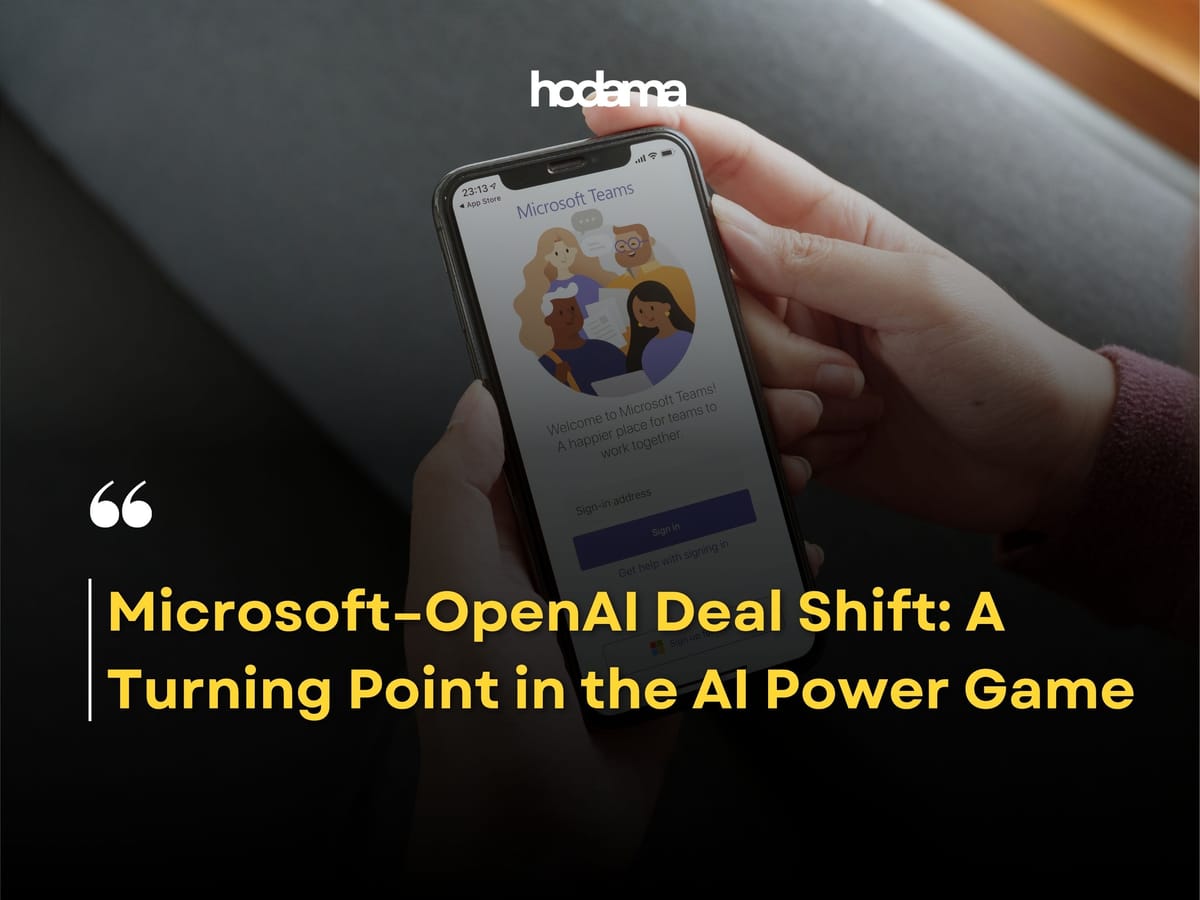
Microsoft–OpenAI Deal Shift: A Turning Point in the AI Power Game

Something happened in the tech world this week that might look like just another corporate deal on the surface, but it could quietly reshape the entire future of AI. Microsoft and OpenAI have renegotiated their partnership, and the changes are more than symbolic. This is not just about two companies adjusting terms. It is about control, freedom, and the direction of one of the most powerful technologies we have ever built. The biggest shift is simple but profound: OpenAI is no longer tightly locked into Microsoft’s ecosystem.
To understand why this matters, you have to look at what existed before. Microsoft had exclusive access to OpenAI’s models and infrastructure in many ways. If OpenAI built something new, it would almost automatically run on Microsoft Azure. That gave Microsoft enormous leverage, not just financially but strategically. But things started to get complicated when OpenAI entered a massive deal with Amazon. Suddenly, those exclusivity terms became a problem, even a potential legal conflict. That tension has now been resolved with this new agreement.
What OpenAI gains here is flexibility. It can now offer its products across multiple cloud providers instead of being tied primarily to one. That might sound like a technical detail, but it changes the competitive landscape entirely. When companies are free to choose where and how they deploy technology, innovation tends to accelerate. Instead of building within constraints, teams can optimize for performance, cost, and scale. This opens the door to faster experimentation and more diverse applications of AI across industries.
At the same time, it would be too simplistic to say Microsoft lost. In fact, Microsoft secured some important advantages. It no longer has to pay a share of its revenue back to OpenAI, which could save billions over time. It also remains a major shareholder in OpenAI, meaning it still benefits from the company’s growth regardless of where its products are deployed. So while it may have given up exclusivity, it has not given up influence. This is less of a defeat and more of a strategic repositioning.
Another critical outcome of this deal is the removal of legal uncertainty. Before this renegotiation, there was a real possibility that Microsoft could challenge OpenAI’s agreement with Amazon in court. That kind of conflict could have slowed down development and damaged trust between partners. By resolving these issues now, both companies are choosing stability over confrontation. In the long run, that kind of decision often matters more than short-term gains.
The real winners, however, might not be either company. They might be the businesses and developers who rely on these technologies. With fewer restrictions, they can choose the cloud provider that best fits their needs while still accessing OpenAI’s tools. More competition between cloud platforms could also lead to better pricing and improved services. When companies compete, users usually benefit. It creates pressure to innovate, reduce costs, and deliver better performance.
You can think of it in a very simple, everyday way. Imagine if you were forced to use only one internet provider, no matter how expensive or slow it was. You would have no choice. But if multiple providers compete, you can switch based on what works best for you. That competition pushes everyone to improve. This is essentially what is starting to happen in the AI infrastructure space right now.
Still, this shift raises deeper questions. As AI companies gain more independence and expand across multiple platforms, who ensures responsible use? Technologies like AI agents with long-term memory are becoming increasingly powerful. With that power comes risk. If development moves faster than regulation or oversight, we could face challenges we are not fully prepared for. Freedom can drive innovation, but it can also create gaps in accountability.
Ultimately, this deal signals a broader change in how the AI industry is evolving. Instead of one dominant partnership controlling everything, we are moving toward a more open and competitive ecosystem. That could lead to faster breakthroughs, but also more unpredictability. The tools we rely on today could change rapidly, and the balance of power between tech giants could keep shifting in unexpected ways.
So the real question is this: does a more open and competitive AI landscape lead to better outcomes for everyone, or are we stepping into a race where the consequences may outpace our ability to manage them?