
Be My Eyes: How a Simple App Is Redefining Digital Compassion for the Visually Impaired

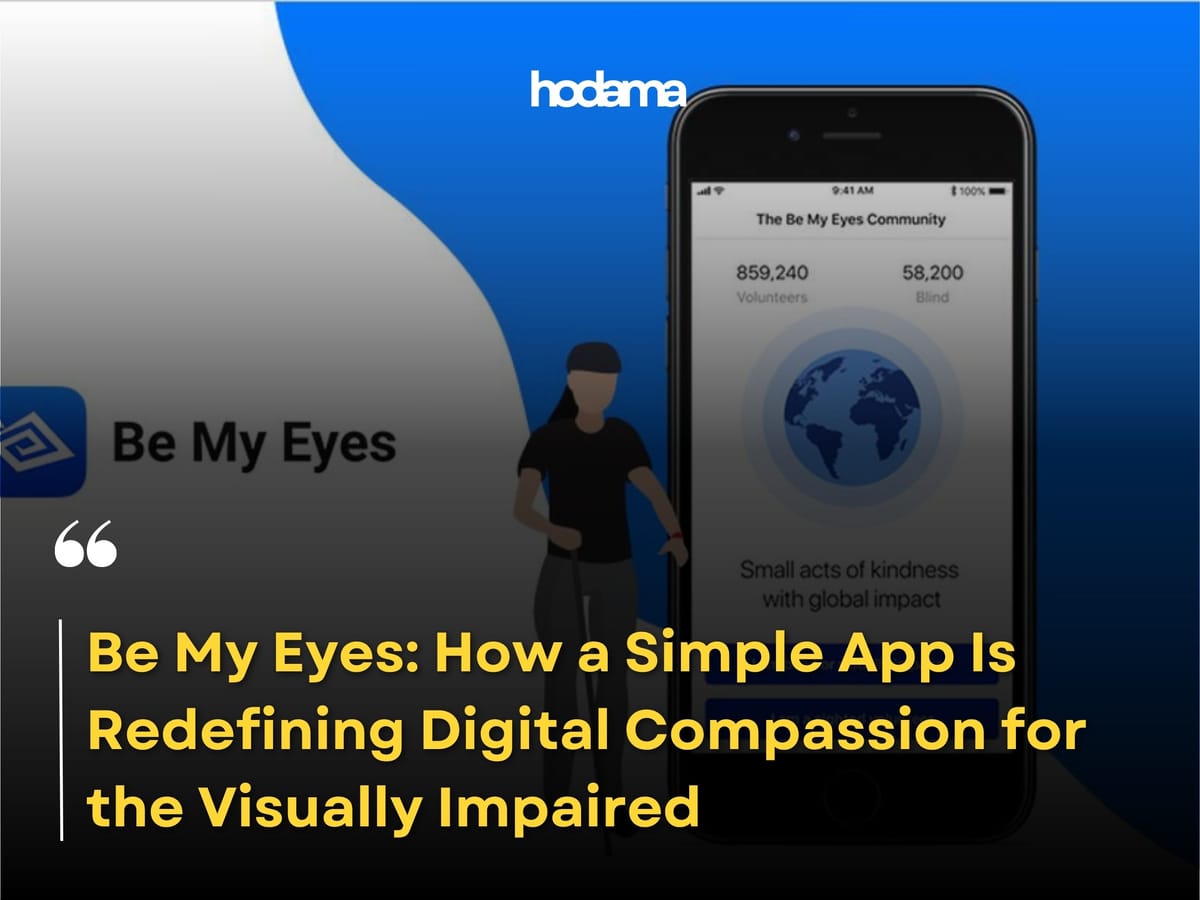
Think about how many times a day you rely on your vision without even noticing it. Reading a message, checking an expiry date, navigating a street, or identifying the right button on a device. These are actions we perform almost automatically. But for millions of visually impaired individuals around the world, these same tasks can become daily obstacles that require assistance, patience, and often dependence on others.
This is where Be My Eyes quietly transforms technology into something deeply human. At its core, the app connects visually impaired users with a global network of volunteers through live video calls. When a user needs help, whether it is reading a label, identifying an object, or navigating a new environment, they simply initiate a call. Within seconds, a volunteer from anywhere in the world answers and becomes their eyes, guiding them in real time through the phone’s camera.
What makes this platform remarkable is not just the simplicity of the idea, but the scale and execution behind it. The system relies on real time video streaming, intelligent call routing, and a globally distributed volunteer base to ensure that help is almost always available instantly. From a technical perspective, this requires efficient backend infrastructure, low latency communication, and scalable cloud systems that can handle thousands of simultaneous interactions without friction.
The impact becomes even more meaningful when you consider the broader context. According to global health data, hundreds of millions of people live with some form of visual impairment. Within the Be My Eyes ecosystem itself, the user base has crossed over a million visually impaired individuals. Even more striking is that the number of volunteers significantly exceeds that, reflecting a powerful truth about human nature. When given the right tools, people are willing to help complete strangers without expecting anything in return.
In recent years, the platform has evolved beyond just human to human interaction. The introduction of AI powered assistance, known as Be My AI, adds another layer to the experience. Using advanced computer vision models, the app can analyze images and provide instant descriptions. This means that even when a human volunteer is not immediately available, users can still receive guidance. It represents a hybrid model where artificial intelligence and human empathy work side by side.
However, this also raises important questions. Can AI fully understand context the way a human can. Can it interpret nuance, urgency, or emotion. At least for now, the answer is not entirely. That is why the human element remains irreplaceable. Instead of replacing volunteers, AI acts as a supportive layer that enhances accessibility rather than redefining it completely.
What truly sets Be My Eyes apart is not just its technology, but its philosophy. It turns digital interaction into an act of empathy. In a world where most apps compete for attention, engagement, and profit, this one quietly builds connection and trust between strangers who may never meet again.
There is something profound about the idea that a few minutes of your time can restore someone’s independence. Not in a dramatic or visible way, but in small, meaningful moments that shape everyday life. It challenges how we think about the role of technology. Is it only about convenience and efficiency, or can it also be about compassion and shared humanity.
Be My Eyes suggests that the future of technology is not just smarter systems, but kinder ones. And sometimes, the most powerful innovation is not a complex algorithm, but a simple connection between two people, where one is willing to help, and the other finally does not have to ask alone.