
Merlin Bird ID: Discovering Bird Species Through Sound Recognition and AI Powered Photo Analysis

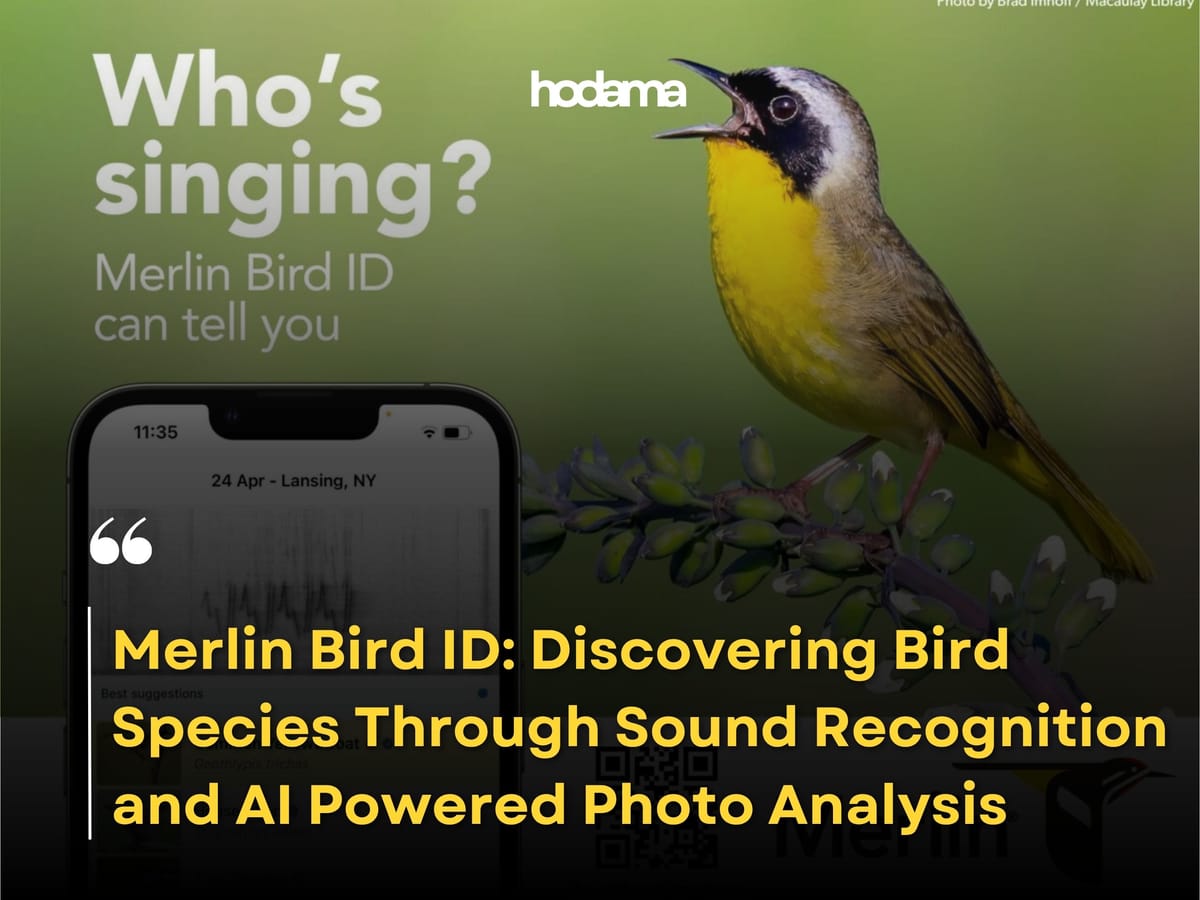
Have you ever heard a bird calling from somewhere deep in the trees and wondered what species it might be, only to realize you had no easy way to find out? Or maybe you spotted a striking bird for a brief moment and wished you could identify it instantly without scrolling through endless images online. This is exactly the kind of everyday curiosity that modern technology is beginning to answer in surprisingly powerful ways, and one of the most impressive examples of this is Merlin Bird ID.
At first glance, Merlin might seem like just another digital field guide, but that would be an understatement. It is a sophisticated AI driven system developed by Cornell Lab of Ornithology, one of the world’s leading centers for the study of birds. What makes this app remarkable is not just its convenience, but the depth of scientific data and machine learning behind it. Years of global bird observations, audio recordings, and image datasets have been used to train advanced recognition models, allowing the app to interpret the natural world in ways that were once limited to experts.
One of the most fascinating features is Sound ID. Instead of relying on visual confirmation, the app allows you to simply record the sound of a bird. It then analyzes the audio in real time, using pattern recognition techniques similar to speech recognition systems, but adapted for bird vocalizations. Each chirp, whistle, and call carries a unique acoustic signature, and Merlin is designed to decode these signatures into identifiable species. What used to be an invisible layer of nature suddenly becomes something you can understand and interact with.
The Photo ID feature is equally compelling. By capturing an image, users can leverage deep learning models that evaluate visual characteristics such as feather patterns, color variations, and body structure. This process transforms what would normally require extensive knowledge and comparison into an almost instant result. For beginners, it creates an experience that feels close to having an expert in your pocket, guiding you through the identification process with surprising accuracy.
Beyond personal use, the broader significance of Merlin lies in its contribution to citizen science. Every observation made through the app has the potential to support real scientific research. When users record sounds or upload images along with location data, that information can contribute to understanding bird migration patterns, environmental changes, and the impact of climate shifts. In this sense, casual curiosity becomes part of a much larger global effort to study and protect biodiversity.
In regions rich in wildlife diversity, such as Sri Lanka, tools like Merlin can play an especially meaningful role. The island is home to a wide range of endemic bird species, yet public awareness about them often remains limited. By making identification accessible and engaging, the app encourages people to pay closer attention to their surroundings. Over time, this can foster a deeper appreciation for nature and even inspire conservation efforts at a grassroots level.
Ultimately, Merlin Bird ID is not about replacing the experience of nature with technology. Instead, it acts as a bridge that enhances our ability to perceive and understand the natural world. A distant sound in the trees is no longer just background noise. It becomes a story, a species, a connection. And in a world where we are increasingly disconnected from nature, that kind of reconnection may be more valuable than we realize.